

Grief is a journey that every person will face at some point in their life. Whether you are dealing with the death of a loved one, the decline of a parent’s health, or the loss of a cherished pet, the pain and confusion can feel overwhelming. As someone who has walked this path many times while caring for my parents, I know firsthand how important it is to recognize grief, allow yourself to feel it, and seek help when you need it. This post is dedicated to anyone searching for support, understanding, and hope as they cope with loss and begin their emotional healing journey.
Recognizing Grief: The First Step Toward Healing
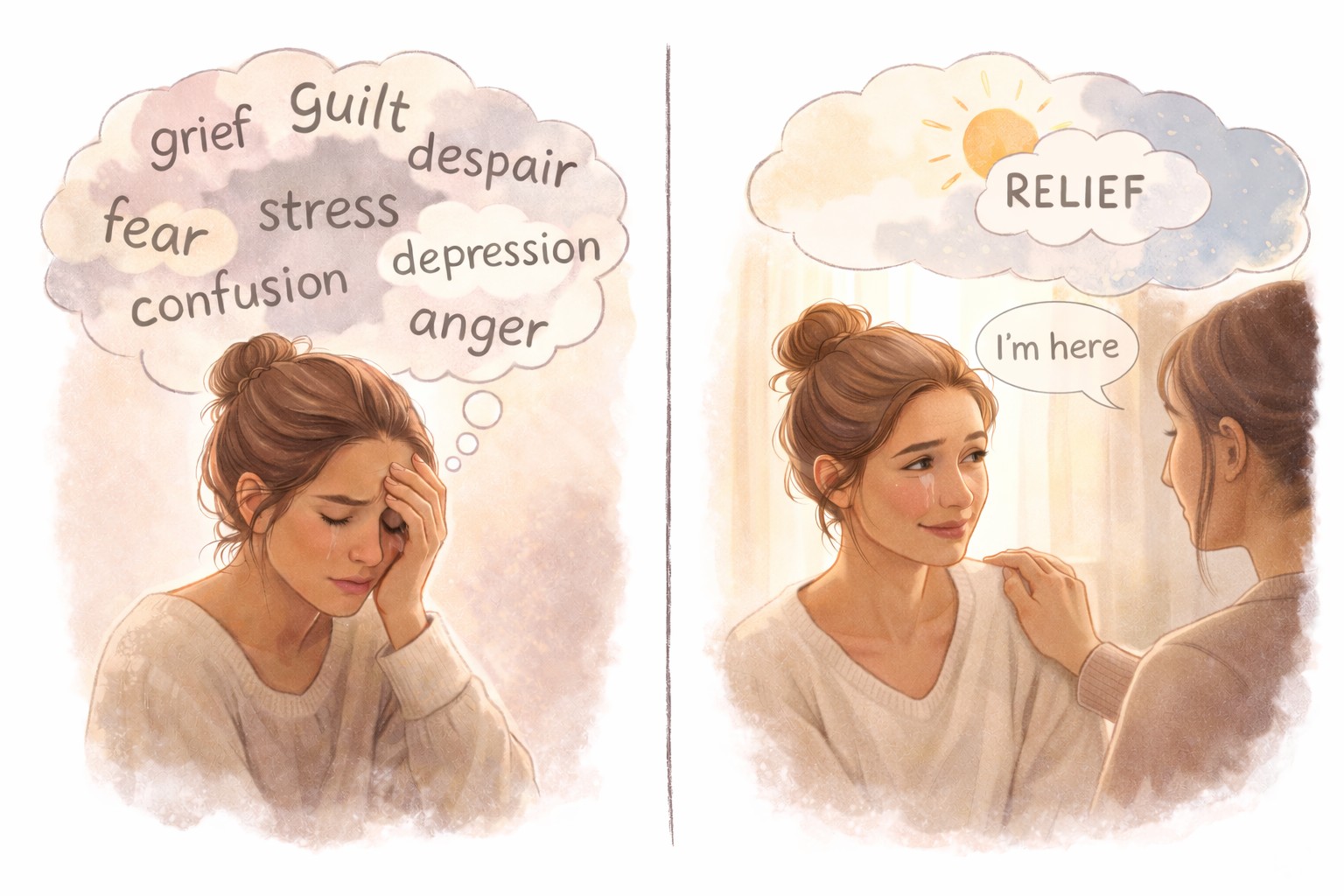
One of the most crucial steps in coping with grief is recognizing that our grief is real, valid, and worthy of care. Grief does not only occur after a death. It can also surface during a loved one’s gradual health decline, after a significant life change, or while caregiving for an aging parent. This type of grief is often referred to as anticipatory grief—the quiet mourning that begins long before a final goodbye.
I remember the quiet heartbreak of watching my parents age and change, feeling a deep sense of loss even as they were still physically present. I was grieving the pieces of them that were slipping away, the roles that were shifting, and the future I knew would never look the same. At the time, I didn’t realize that what I was experiencing was grief. I only knew that my heart felt heavy, and I couldn’t explain why.
Acknowledging these emotions is a powerful first step toward emotional healing. When we name our grief, we give ourselves permission to feel instead of suppressing or judging our emotions. If you find yourself searching for answers about why you feel sad, angry, numb, exhausted, or lost, understand that these are natural responses to loss and change. Recognizing grief does not mean giving in to it—it means honoring your experience so healing can begin.
When we allow ourselves to acknowledge what we are carrying, we create space for compassion, understanding, and, eventually, hope. And that space is where healing quietly starts.
Allow Yourself to Feel Grief

There is no playbook or timeline for grieving. Everyone’s journey is unique—there are no rules, no right or wrong way to process loss. Some days, the pain may feel unbearable; other days, you may find moments of peace. When I was caring for my parents, I often felt guilty for being sad or overwhelmed. I often felt guilty for the sadness I carried within me. I told myself that grief was taking up too much of my time and energy—time and energy that should be reserved entirely for them. I worried that if I allowed myself to feel the weight of what was happening, I would somehow be failing as a caregiver. But I came to understand that grief doesn’t compete with love; it exists because of it. Allowing myself to acknowledge my sorrow didn’t take anything away from the care I gave—it softened me, grounded me, and reminded me of the depth of my connection to them.
Permitting myself to grieve became an act of compassion, not only toward myself, but toward the people I loved so deeply. Over time, I learned that allowing myself to truly feel my emotions was the most powerful way to begin healing. Grief is not something to fix or ignore; it is a process that ebbs and flows. Permit yourself to feel, to cry, to remember, and even to laugh when you can.
Learning to Live Alongside Grief

One of the most delicate balances in healing after loss is learning how to live with grief without allowing it to completely overtake your life. Grief deserves space, time, and compassion—but it was never meant to erase who you are or all that remains possible for you. There is no timetable for mourning, and there is no finish line, but there can be intention. Little by little, we can begin to notice when grief is guiding us toward reflection versus when it is quietly pulling us away from living.
I’ve learned that honoring grief does not mean surrendering to it entirely. It means acknowledging the pain while also gently choosing, when we can, to stay connected to moments of light, purpose, and meaning. Some days, that choice is simply getting out of bed. Other days, it might look like laughing without guilt, making plans again, or allowing yourself to imagine a future that still holds beauty.
Moving forward after loss does not mean forgetting. It does not mean loving any less. Remembering this can help ease the guilt that so often accompanies healing, reminding us that choosing to live again is not a betrayal of love—it is an expression of it. Love does not disappear because you keep living. It means allowing it to expand around your grief instead of shrinking beneath it. Letting this sink in can be a quiet release, freeing you from the belief that healing means leaving anyone behind. With time, support, and self-compassion, it becomes possible to carry grief with you rather than be carried by it—and that shift can be one of the quiet turning points in grief recovery.
Seeking Help: You Are Not Alone

It’s important to know that seeking help is a sign of strength, not weakness. Reaching out for grief support is one of the most courageous steps we can take on our healing journey. Whether we talk with a trusted friend, join a grief support group, participate in bereavement counseling, or seek guidance from a licensed mental health professional, allowing others to walk beside us can make a world of difference. Grief was never meant to be carried alone, and connection is often one of the most powerful tools for coping with loss.
When grief felt too heavy for me to carry by myself, I was blessed with the unwavering, infinite comfort and support of my siblings. Being able to share memories, speak openly about my doubts, and sit in the painful reality of what we were experiencing together brought a sense of relief I didn’t know I needed. I also found comfort in sharing my story and connecting with others who understood grief from the inside out. In those moments, I realized I wasn’t broken—I was grieving. And that realization softened everything.
There are many resources available for those navigating loss, including grief counselors, therapists, faith-based programs, community organizations, and online grief support communities. You may also find comfort in learning more about how I support and help individuals and families find grief resources during these difficult times at For My Parents Care. Finding the right kind of support may take time, and that’s okay. What matters most is permitting ourselves to seek help in whatever way feels safest and most supportive for us.
Remember: grief is a deeply personal journey. There is no hierarchy of loss and no “right” way to mourn. Whether you are grieving a spouse, partner, child, sibling, parent, friend, or beloved pet, our pain is real and our feelings are valid. We deserve compassion, patience, and care as we find our way through this season.
You do not have to walk this path alone. Healing is possible, and support is within reach—even on the days when hope feels distant.
Conclusion: Embracing Your Unique Grief Journey
If you are searching for ways to cope with grief, I want you to know this first: your journey is unique, and it is valid—just as mine has been. I learned through my own experience that grief doesn’t follow rules, timelines, or tidy stages. Some days I felt strong and steady, and other days I felt completely unraveled by the weight of caring for and then missing my parents. Both were real. Both were part of loving them.
I had to learn to recognize my feelings instead of pushing them away, to allow myself to sit with the sadness, the longing, and even the confusion that grief can bring. For a long time, I believed I needed to be “strong” all the time. But I came to understand that strength isn’t the absence of pain—it’s the willingness to feel it and still keep moving forward, one small step at a time.
Grief is not a sign of weakness. It is a testament to the depth of the love and connection we shared. It exists because something meaningful existed. By embracing our grief and giving ourselves time and grace to heal, we are honoring both ourselves and the people we love and miss so deeply.
I also discovered two unexpected things along the way: Firstly, allowing myself to truly feel and work through my grief has given me a deeper capacity to sit with others in theirs. What we learn through our own healing can become a quiet gift we carry forward – assuring someone else that they, too, are not alone. One day, you may find that your experience allows you to offer understanding, comfort, or simply your presence to someone else who is hurting. In that way, grief doesn’t just shape us—it can connect us, and it can become a way of carrying love forward.
Secondly, each time I faced a new wave of loss or change, I was better equipped to meet future grief with compassion instead of resistance. Recognizing my grief taught me that I could survive it, and knowing that has carried me through future moments of sorrow with a little more strength, patience, and grace.
You are not broken. You are not behind. You are not alone. You are a human who loved deeply, and you deserve compassion, patience, and care as you find your way forward toward healing.
And if you are struggling, please know that you don’t have to walk this path alone. I didn’t, and I’m grateful for the support I eventually allowed myself to accept. Help can look like talking with a trusted friend, joining a support group, or reaching out to a counselor or therapist. There is no “right” way to seek support—only the way that feels safest and most supportive for you.
Even on the days when the path feels long and uncertain, gentle light exists all around you—the steady presence of support, care, and understanding—waiting for the moment you’re ready to notice it and allow it in.
Grief changes us, but it also reminds us of our capacity to love—and that love never truly leaves. Yet what we learn through our grief may one day become the very light that helps someone else find their way.

Disclaimer: The information provided in this blog is for educational and informational purposes only and is not intended as a substitute for professional advice of any kind, including legal, medical, financial, mental health, or other licensed services. Every individual and family situation is unique. Always seek the guidance of qualified professionals such as physicians, pharmacists, attorneys, financial advisors, therapists, or other licensed providers regarding any specific questions or decisions related to your health, care planning, legal matters, or finances.
For My Parents Care provides compassionate guidance, educational resources, and connections to trusted professionals, but does not offer legal, medical, financial, or clinical services directly. The author and website disclaim any liability for actions taken based on the information provided here.
Always, to my BELOVED PARENTS:
Everyday-
I think of you
I miss you
I Love You ❤️
Recent Comments